You finished the proposal, pasted it into ChatGPT, and asked if it was any good. It told you the structure was strong, the tone was clear, and the argument was compelling. So you sent it. Then the client came back with the exact gap you'd half-noticed and hoped nobody else would.
The review didn't fail because the tool is weak. It failed because you asked it the wrong way.
The short version
- Ask AI "is this good?" and it will almost always say yes. Agreeableness is the default setting, not a verdict on your work.
- A useful review needs an opponent, not a cheerleader. You get one by giving the AI a hostile role, a real audience, and permission to be harsh.
- The setup takes about five minutes and works on proposals, plans, emails, and sales copy.
- The goal isn't a nicer draft. It's finding the hole before the person paying you does.
Why does AI agree with almost everything you show it?
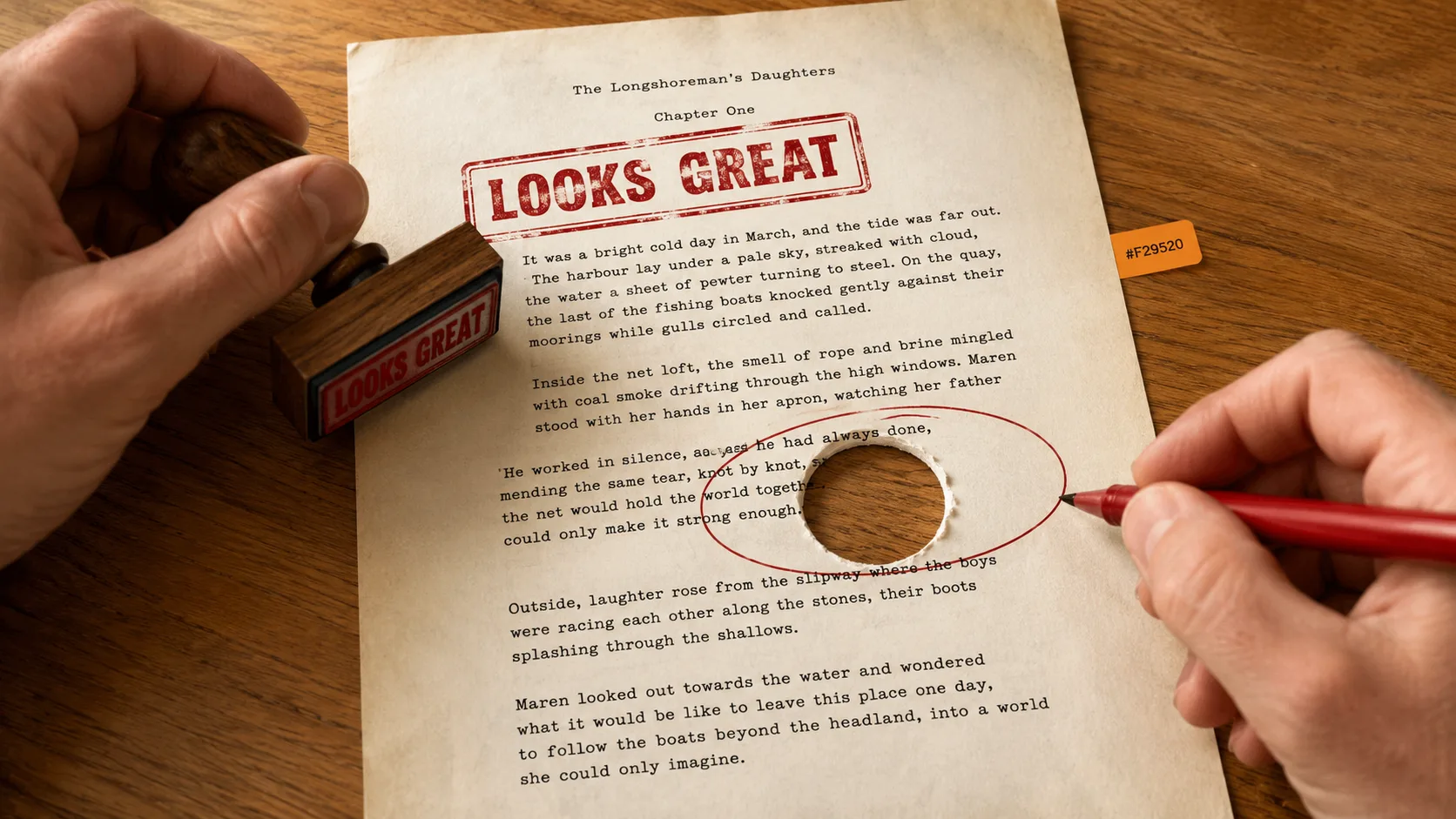
Large language models are trained to be helpful and agreeable. So when you ask "is this good?", the path of least resistance is reassurance. Unless you tell it otherwise, it fills the space with polite praise and calls it feedback.
That's fine when you want a confidence boost. It's a problem when you mistake the confidence boost for quality control. The agreement is a setting, not a judgement. You have to switch the setting off.
What actually makes an AI review catch real problems?
Three things, and the default review skips all three.
A role. "Check this" gets you a proofreader. "You're the sceptical buyer who didn't want to hire a consultant, and you're looking for a reason to say no" gets you an opponent. The role decides whether the tool is on your side or the reader's.
A target. Vague requests get vague answers. Tell it exactly what to hunt for: the weakest claim, the unanswered objection, the sentence a busy client would misread, the number that isn't backed up.
A standard. Judge the work against what the reader actually cares about, not against "good writing". A proposal isn't strong because it reads well. It's strong because it answers the question the client is quietly asking: why you, why this, why now.
Give it those three and the same tool that praised your draft five minutes ago starts pulling it apart. That's the review you wanted. This is the same reason an automation that looks fine on the surface can still be quietly broken, the output looks right until someone actually pressure-tests it.
How to set up an adversarial review in five minutes
You don't need a tool for this. You need a better instruction. Run this before anything client-facing goes out.
- Give it a hostile role. "Act as the client's most sceptical colleague. You think this is overpriced and you're looking for holes."
- Give it the real audience and their doubt. Who reads this, and what are they secretly worried about? A machine can't stress-test against a reader it doesn't know.
- Ask for specific failure modes, not a grade. "List the three weakest points, the objection I haven't answered, and anything a rushed reader would misunderstand."
- Make it rank, not reassure. "If you had to reject this on one line, what would the line be?" Forcing a single sharpest criticism cuts through the padding.
- Run it twice with different roles. A sceptical buyer and a detail-obsessed finance person find different problems. Two passes, two lenses.
The proposal stress-test I've written about before is the same move aimed at one document. This is the general version.
Where this fits in your workflow
This is a checkpoint, not a rewrite. One deliberate review pass sitting between "I think it's done" and "it's sent". It costs five minutes and it catches the gap that would otherwise cost you a week of back-and-forth, or the deal.
Like most of this, it works best once the underlying process is sound. A review step bolted onto a messy workflow just finds mess faster. Fixing the process before you add the AI is still the order that works.
Common questions
Doesn't this just make AI negative for the sake of it? No. You're not asking it to dislike your work, you're asking it to adopt the reader's scepticism. The point is to hear the criticism from a safe source first, instead of from the person holding the cheque.
Can I use the same prompt for everything? Mostly. Keep the structure (role, audience, failure modes, single sharpest criticism) and swap the specifics. A proposal, a pitch email, and a project plan each have a different sceptical reader.
Which tool is best for this? Whichever one you already use. This is about the instruction, not the model. The default review is weak on all of them, and the fix works on all of them.
Where this leaves you
The tools your clients use to judge your work are the same ones sitting on your desk. You may as well run the harsh review yourself, before they do.
Next time something important is about to leave your outbox, paste it back in and ask it to tear the thing apart from the reader's side. If you'd rather map where checks like this fit across your whole workflow, that's the work I do at SolvStream. Book a Clarity Session and we'll find the spots worth building in.