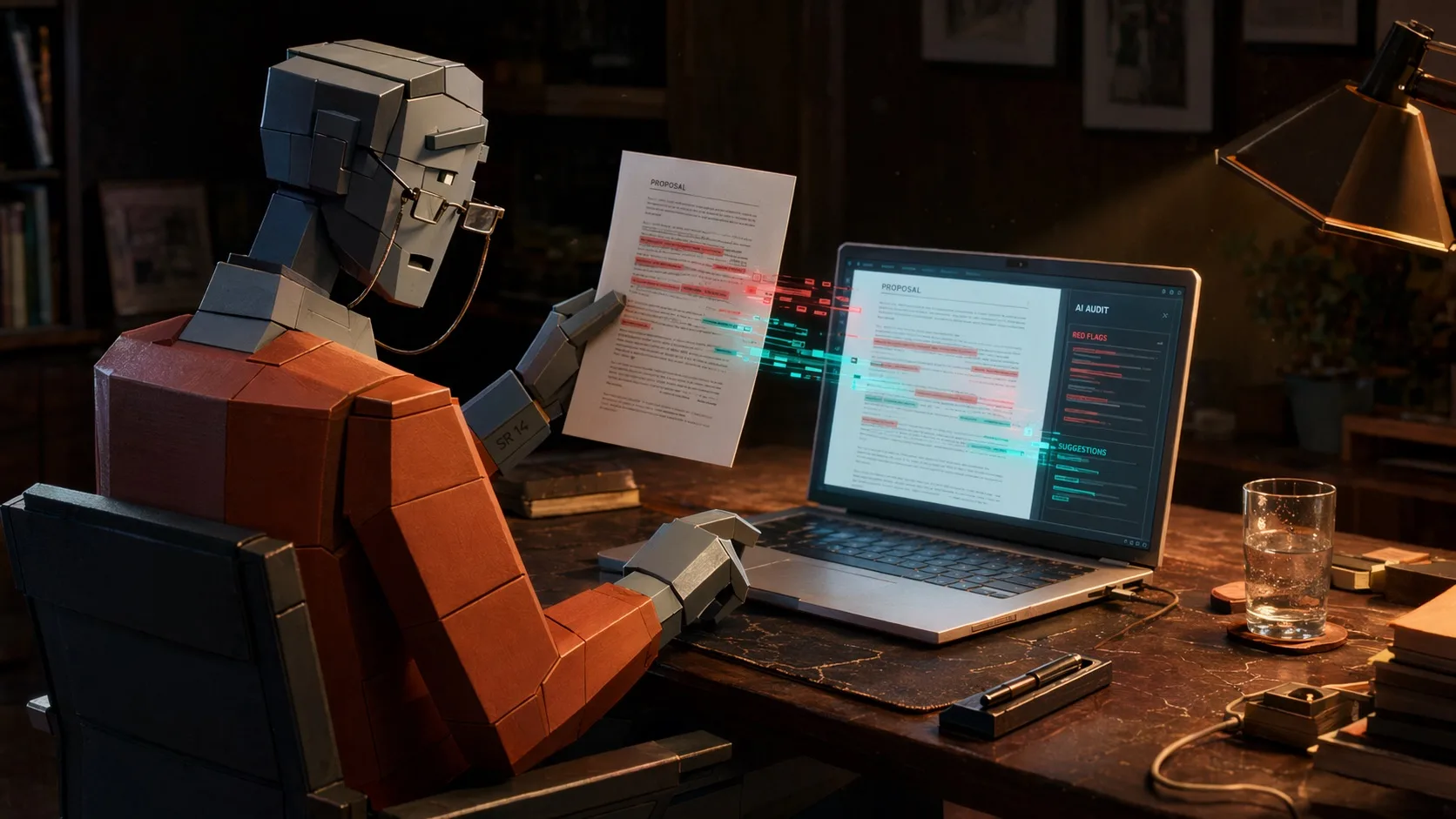
One of my clients runs every proposal I send him through ChatGPT before he responds.
I didn't find this out because he told me. I found it out mid-project, when he started coming back with questions I hadn't anticipated. Specific, structural questions about gaps between what I'd promised in the proposal and what the scope actually covered.
First time it happened, I was annoyed. Second time, I was impressed. Third time, I changed how I write proposals.
Since then, stress-testing proposals with AI has become a standard step in every engagement at SolvStream. If you're a solo consultant or service business owner sending proposals without running them through an LLM first, you're finding out what the AI thinks at the same time your client does.
The short version
- Your clients are already pasting your proposals into AI tools and asking them to find the gaps. Whether they tell you or not.
- Most proposals rely on language that sounds confident but commits to very little. AI spots this in seconds.
- You can run the same stress test yourself before you send anything. It takes five minutes.
- The prompts in this post are the ones I actually use. Copy them, paste them, fix what they find.
What does AI actually flag in your proposals?
Four patterns show up in almost every proposal I've stress-tested. AI reads for commitment and specificity, not tone or confidence, which is why it catches things human reviewers miss.
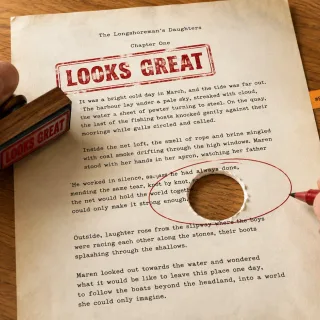
Vague deliverables disguised as specific ones. "We will support the implementation of..." sounds firm. It isn't. "Support" can mean anything from "we'll do the whole thing" to "we'll answer emails about it." AI flags this immediately because it reads for commitment, not tone.
Conditional language that hedges everything. Words like "where appropriate," "as needed," and "subject to" appear throughout most proposals. Individually they're reasonable. Stacked up, they create a scope that promises very little while reading like it promises a lot. An LLM counts them and tells the reader exactly how many conditions are attached to the deliverables.
Scope items that imply more than intended. I once used the word "automatic" in a proposal where "assisted" would have been more honest. My client spotted it because ChatGPT spotted it. That one word cost me weeks of expectation management.
Missing boundaries. Most proposals and statements of work describe what's included but not what isn't. AI is good at asking "what happens if the client needs X?" when X is adjacent to the scope but not covered. If your proposal doesn't answer that, the AI will raise it. This is where scope creep starts, and it's entirely preventable.
The stress-test process
This is what I do with every proposal before it goes out. The whole thing takes about five minutes.
Step 1: Paste the full proposal into an LLM
I use Claude or ChatGPT, whichever is open. Copy the entire document, including terms and pricing. The AI needs the full picture.
Step 2: Run the gap analysis prompt
Here's the prompt I use:
Read this proposal as if you are a sceptical client who wants to know exactly what they're getting for their money. Identify any gaps between the promises made and the deliverables described. Flag vague language, conditional commitments, and scope items that could be interpreted more broadly than intended. List each issue with a direct quote from the proposal.
The key part is "direct quote from the proposal." This stops the AI from giving you generic feedback and forces it to point at specific sentences.
Step 3: Run the client-questions prompt
After the gap analysis, I run a second prompt:
Based on this proposal, generate 5 questions a careful client would ask before signing. Focus on scope boundaries, what happens when things change, and anything that is implied but not stated.
These questions are often sharper than what most clients would ask themselves. They're the questions a client asks after sleeping on it, or after running it through their own AI.
Step 4: Fix what it finds
Go through each flagged issue. For every vague deliverable, either make it specific or remove it. For every conditional, decide if it's necessary or if it's just hedging. For every implied promise, make it explicit or add a boundary.
The goal isn't a perfect proposal. It's a proposal that says what it means and means what it says.
Does stress-testing proposals with AI actually make a difference?
Yes. The first proposal I stress-tested came back with seven flagged issues. Seven. In a document I thought was tight.
Three were vague deliverables I could tighten. Two were conditions I hadn't realised I'd stacked. One was a pricing line that implied ongoing support when the scope was a one-off. One was a missing exclusion that left the scope open to interpretation.
Fixing them took twenty minutes. The client who received that proposal had zero questions about scope. First time that had ever happened.
Since then, every proposal goes through the stress test. The pattern I've noticed:
- First draft proposals typically get 5-8 flags
- Post-stress-test proposals drop to 1-2, usually minor
- Client questions about scope have dropped to almost zero
- The confidence I feel when sending is noticeably different, because I know what the AI would say before the client asks
Common questions
Does this mean I should write proposals for AI rather than humans? No. Write for the human first. The stress test is a quality check, not a writing style. Your proposal should still read well, tell a story, and feel personal. The AI catches the structural gaps that good writing can mask.
Which AI tool works best for this? Any capable LLM works. I alternate between Claude and ChatGPT depending on what's open. The prompts are the same. The tool matters less than the structure you give it.
Won't this make my proposals sound robotic? The opposite. Removing vague language and tightening scope usually makes proposals shorter and clearer. Clarity sounds confident. Removing hedges doesn't make you sound like a machine.
What if I'm already using AI to write my proposals? Then you especially need to stress-test them. AI-generated proposals are often fluent but vague. They sound confident without committing to anything specific. The gap analysis prompt catches exactly this pattern.
What your clients are already doing
The construction director who commented on my LinkedIn post about this said it plainly: he wishes he'd thought to run proposals through AI sooner.
He's not unusual. Clients with ChatGPT Plus, Claude Pro, or even the free tiers are pasting in your proposals, your scopes, your retainer reports. They're asking the AI to find what you missed. Some of them are doing it before the first meeting, using AI to prep sharper questions than they'd come up with alone.
This is already happening, not a future trend. The question is whether you get there first or your clients do.
The prompts, ready to copy
Gap analysis:
Read this proposal as if you are a sceptical client who wants to know exactly what they're getting for their money. Identify any gaps between the promises made and the deliverables described. Flag vague language, conditional commitments, and scope items that could be interpreted more broadly than intended. List each issue with a direct quote from the proposal.
Client questions:
Based on this proposal, generate 5 questions a careful client would ask before signing. Focus on scope boundaries, what happens when things change, and anything that is implied but not stated.
Language audit:
Scan this proposal for the word "automatic" or "automated." For each instance, assess whether the described process is truly automatic or whether it requires human involvement. Flag any instances where the language implies more automation than the scope describes.
Run all three. Fix what they find.
Where this leaves you
Five minutes of stress-testing catches what hours of careful writing misses. Not because you're a bad writer, but because you know what you meant, and the proposal doesn't always say it as clearly as you think.
Your clients are already running this test. The only difference is whether you see the results first or hear about them in a follow-up email full of questions you didn't expect.
If your proposal process has deeper problems than vague language, the prompts won't fix that. The issue is usually structural: no reusable components, no clear inputs, every proposal built from scratch. That's what SolvStream's Proposal Friction Diagnostic is designed to find.
But for the writing itself, start with the stress test. Send proposals that survive the AI interrogation, not just the human one.