
Featured image for How AI Gives Your Service Business a Competitive Edge on SolvStream blog
Back to Blog
AIAutomationStrategy

How AI Gives Your Service Business a Competitive Edge

Shaun Richardson4 March 2026

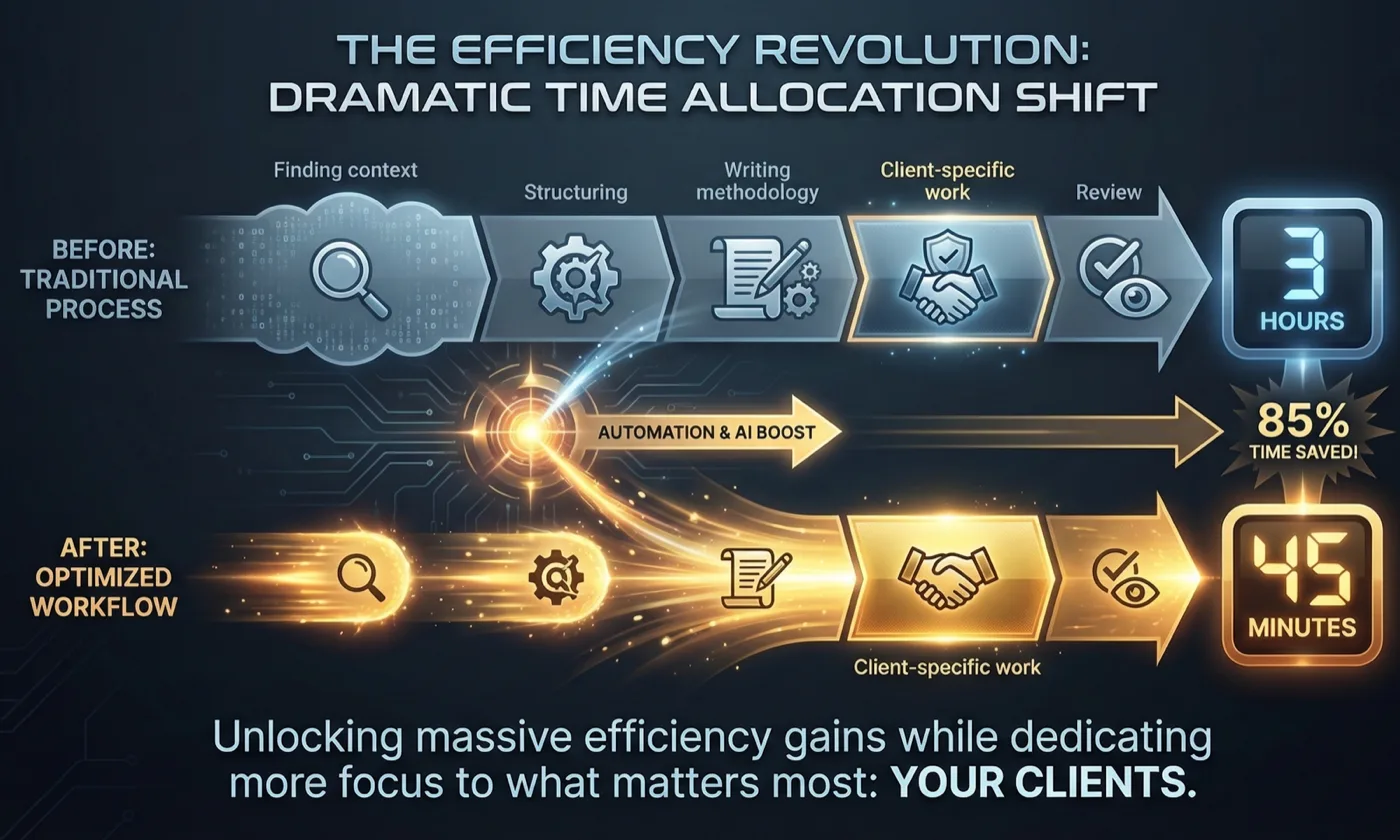
Your competitor just spent three hours on a proposal that you completed in forty-five minutes. They didn't hire faster, work longer, or have a bigger team. They automated the dumb work.

This is the real competitive advantage AI delivers to service business owners, solo consultants, and small teams: freed-up time and mental space to do work that actually matters. SolvStream helps teams identify these exact bottlenecks and systematise them. Not flashy productivity gains or sci-fi automation. Just the quiet ability to stop wrestling with admin and start wrestling with strategy.

The short version

  • Most service businesses waste 20-30% of billable capacity on repetitive tasks that AI can handle in minutes.
  • AI shines when applied to specific bottlenecks, not broad "transformation" of the whole business.
  • The advantage accrues to those who automate first and hardest in their immediate market segment.
  • Implementation is surprisingly straightforward if you're clear about what's broken.
  • Your real competition is every business that hasn't started yet.

Where the actual bottleneck lives

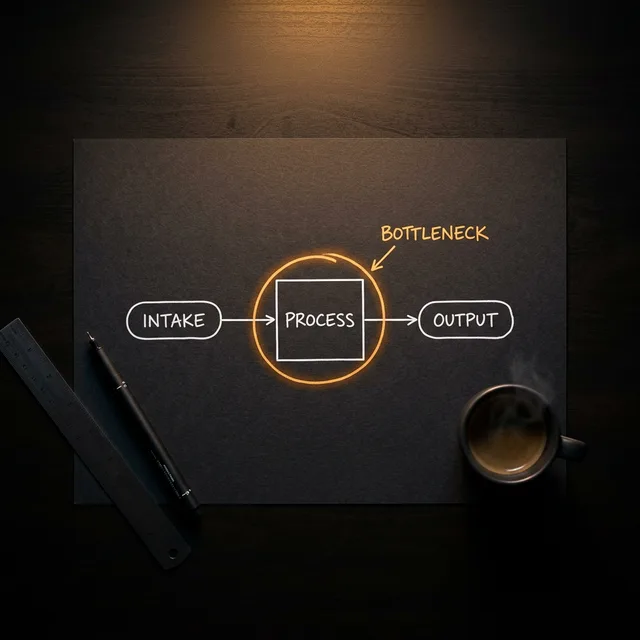
The thing about service businesses and consultancies is that they're almost entirely people-dependent. You deliver expertise. You deliver thinking. You deliver relationships. But most of your week is eaten by stuff that isn't any of those things.

Client intake forms that someone manually enters into a system. Proposals that you rebuild from scratch each time. Email threads where three people are asking the same question. Scheduling that takes two rounds of back-and-forth. Expense reports. Invoice corrections. Status updates in Slack nobody reads.

This isn't new. But it's particularly damaging in a service business because every hour spent on friction is an hour not spent on actual work or actual thinking. That's where AI changes the maths.

The Fragmentation Tax is what you pay when workflows don't fit together cleanly. Information bounces between tools. Context gets lost. Someone re-enters data that already exists somewhere. A consultant spends Tuesday morning hunting across four applications to answer a question that took five minutes to find. This is where AI actually works in service businesses, because you're not asking it to replace expertise. You're asking it to stop wasting expertise.

What AI actually solves

Here's what I've seen work in real service businesses:

Client data stays in one place. AI can watch incoming forms, emails, and client interactions, and ensure that information lands in the right system without someone acting as a middleman. New client comes in via LinkedIn message? AI extracts the essentials and flags any missing details. Proposal gets requested? AI pulls relevant project history, pricing structures, and compliance notes automatically.

Proposals stop being full rewrites. The core of your proposal is probably 80% similar each time. Same methodology, same company information, same risk assessment structure. Build a template once, let AI populate it with details specific to this client, then you spend time on the actual thinking work. Time saved? Usually 2-4 hours per proposal.

Meetings have actual agendas and outcomes. AI can watch your calendar, pull together an agenda from recent decisions and open items, and send it out before the meeting. After the meeting, it can summarise decisions, flag what actually changed, and surface which action items landed with whom. No more "what was the decision again?" three days later.

Documentation stays current. Service businesses drown in outdated internal docs. AI can watch Slack, emails, and your project system, flag when something changed, and suggest updates to relevant documentation. Your runbook for onboarding doesn't become stale because someone actually maintains it.

Scheduling doesn't require a calendar ambassador. Use AI to handle the "when works for you" dance, timezone conversion, and back-and-forth. One conversation instead of four emails.

The competitive part

None of this is magic. It's not a breakthrough. But it matters because most service businesses aren't doing it yet, and the ones that do pull ahead visibly.

When you spend 20% less time on friction, you can either pocket the efficiency gain or reinvest it. Reinvest it and you're suddenly more responsive to clients, more available for strategy work, and able to take on more complex projects. Your people feel less burnt out because they're not drowning in admin. They stay longer. They do better work. That compounds. This is Operational Equity: each fixed workflow becomes infrastructure for the next, creating compound returns on your process improvements.

Your competitor is still rebuilding proposals. Still cross-checking information between systems. Still attending meetings where half the time is spent figuring out what we're actually talking about. They're not slow because they're lazy. They're slow because their workflow is fragmented and nobody has automated the connective tissue.

The advantage isn't that you're smarter. It's that you waste less.

How to actually start

This is the part where most advice goes mushy. "Create a vision," "Transform your culture," all that corporate nonsense. Skip it.

Instead, pick one thing that costs you real time every week. One workflow that's genuinely broken. That's your starting point. This is the principle of Correct Adaptation: fix the structure first, then embed AI. No AI on top of chaos.

Maybe it's proposal generation. Maybe it's client onboarding. Maybe it's scheduling. Figure out the current steps, the time it takes, what data already exists versus what you re-enter. Get precise about it. Make sure the workflow itself is sound before automation.

Then map AI into that specific workflow. Not the whole business. One thing. Build it, use it, measure how much time you actually saved. Once you've automated that and it feels normal, pick the next one.

This is precisely what SolvStream's One Week Ops Reset is designed to do: identify the three to five highest-impact bottlenecks in your service business and map out how AI can cut them down. Not transformational thinking. Just practical work that frees up time.

The reality check

AI won't make you creative. It won't generate strategy. It won't replace the thinking that makes your service business valuable. It will handle email sorting, data entry, scheduling coordination, and documentation. It will make your good people better at their jobs because they're not drowning in logistics.

That's enough. That's more than enough. That's a genuine competitive advantage because almost nobody's doing it seriously yet, and the ones who do are noticeably faster, less stressed, and more available for real work.

The window for that advantage probably closes in two to three years. Everyone will expect it by then, and it'll be table stakes instead of differentiator. Right now, you can be the business that doesn't make clients wait for proposals. That actually responds to emails within an hour. That knows what you discussed last meeting without someone having to reconstruct it.

That's not revolutionary. It's just more professional than your competition. And that's how you build actual edge.

Shaun Richardson, founder of SolvStream

Shaun Richardson

Founder at SolvStream

Shaun helps business owners fix the operational bottlenecks that cost them time and momentum. His work blends practical operational thinking with focused AI integration, helping businesses build tools they'll actually use and processes that hold up under pressure.

Shaun writes about operational clarity, intelligent technology, and the quiet power of getting out of your own way.

Last updated: 4 March 2026

We use optional analytics cookies to understand how visitors use this site. No personal data is collected. Privacy Policy